Driving in Puerto Rico (2026): What Tourists Need to Know Before Renting a Car

Driving in Puerto Rico is hands down the best way to see the island – it’s also one of the biggest decisions travelers struggle with when planning a trip there.
If you’re wondering whether you actually need to rent a car, how safe driving is, or what to expect when driving in Puerto Rico, this guide will answer all those questions.
I’ve driven in Puerto Rico on four separate trips, including at night, during rainstorms, and in rural areas and overall, each time, I found it comparable to driving in many US cities, with minor differences.
Quick Answer: Is Driving in Puerto Rico Easy?
Yes – if you drive frequently and have no major issues at home, driving in Puerto Rico will be easy and doable for you. Having a car to yourself will allow you to explore more of the island and see places that tours or taxis won’t take you to.
Here’s what to generally expect:
- Most roads are well developed – you shouldn’t have problems getting from point A to point B, especially as a tourist visiting the more popular places
- Signs are comparable to US signs – many are in Spanish but you shouldn’t have issues understanding what they mean
- A US license is valid in PR – since Puerto Rico is a US territory, you won’t need an international license to rent a car
- Things to watch out for:
- Drivers can be a little more aggressive
- Potholes in more remote areas can be common
- Weather can change quickly at times with rain sneaking up on you


Renting a Car in Puerto Rico
Renting a car when traveling might seem intimidating no matter where you travel. There are lots of things to consider: where to rent it, safety, navigation, parking, tolls, and road conditions. Below you’ll find my honest opinions on each of the topics based on the experiences I had in Puerto Rico after numerous rentals.
Do You Need a Car in Puerto Rico?
Well, that will depend on what you want to do on the island. If you’re coming on a cruise or are simply planning to stay in one area like San Juan or any bigger city, Ubers will be sufficient for you. There are also many arranged tours that can take you to popular spots like El Yunque Rainforest or neighboring island excursions. While public transportation is not Puerto Rico’s strongest suit, Uber is pretty developed and reasonably priced for shorter distances.
| Location | Need a car? | Why? |
| Old San Juan | Probably not – if you’re not planning to explore much outside the city | It’s a very walkable city and there are also plenty of Ubers around |
| Condado/Isla Verde | Optional | There are Ubers around but parking is much easier in Isla Verde areas so it might work out for you |
| Luqillo/El Yunque/West Coast | Yes | Very limited Uber availability so you’ll be stuck at your hotel |
If you’re planning to explore the island, do things on your own schedule or get a more local, authentic experience, then you’re much better off renting a car.
Don’t know if you’ll be exploring many locations in Puerto Rico? Check out my full Puerto Rico itinerary to see what this beautiful island has to offer.
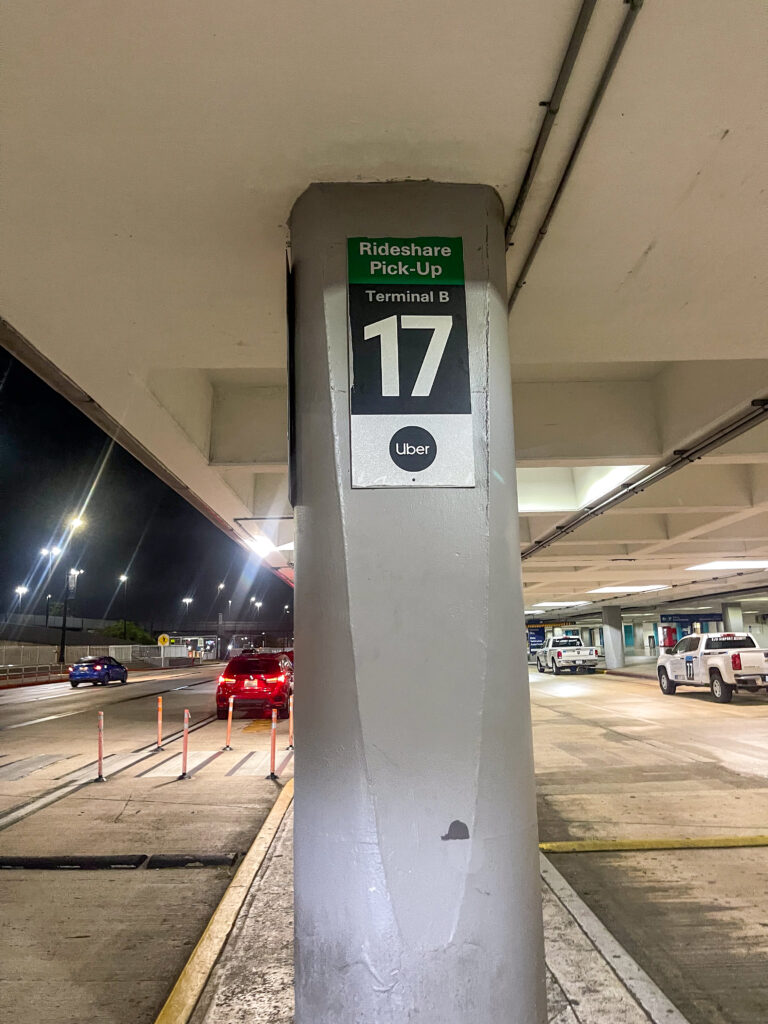
Uber pick-ups are clearly marked at the airport or you can easily pick up a car at the airport as well.
Best place to rent a car in Puerto Rico
For most travelers, the easiest rental pickup will be the airport in San Juan. They have many options for vendors, so choose the provider you trust the most.
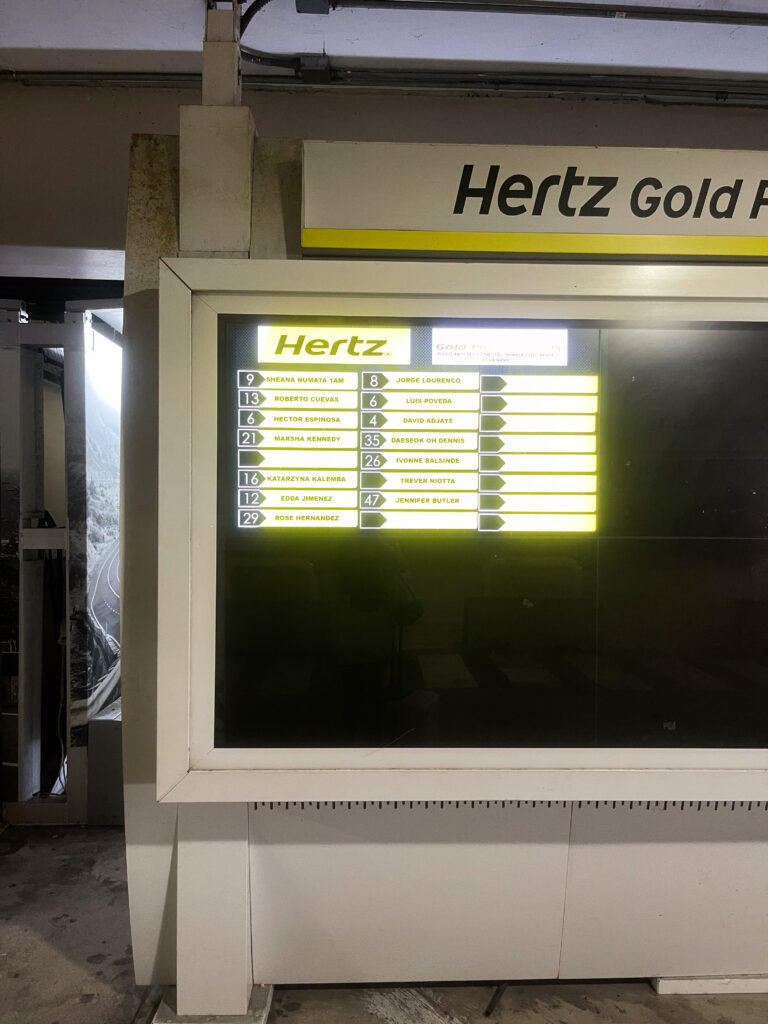
I personally have rented with Hertz (4 times in Puerto Rico), and they have yet to fail me. One of my travel card perks is the Hertz Gold+, which allows me to pre-book a car in the app and simply picking it up in my assigned parking spot (picture above). It’s the easiest way without the need to wait in any counter lines. I have also rented the car in San Juan and dropped it off in Aguadilla (BQN) airport without any issues.
They’re quick to assist you, and their pricing is pretty fair compared to all others. And no, this is not a sponsored or a commission link; I simply find them very reliable and have never had a bad experience with this company in any country I have rented with them (15+ car rentals).
What type of car should you rent in Puerto rico?
Renting a normal-sized car (sedan) is more than sufficient when driving in Puerto Rico. Roads are pretty developed, and unless you’re doing some off-road trip, you will not need anything bigger.
Do you need insurance when renting a car?
You need insurance for any car rental. Whether that comes from your credit card or the car rental company is up to you. If you have a travel credit card like Capital One Venture, for example, check what type of coverage it includes. If you have primary coverage, use it for your rentals; it’s one of the biggest underrated perks your card has. Just make sure to decline the company’s offered insurance and book the on that specific card in order for it to be active.
Don’t let car companies bully you into insurance or tell you it’s not valid. It is valid and it will cover you if anything happens. However, if you have never used it before, make sure to confirm that your coverage includes.
I personally had an incident in Spain where someone broke into my rental car, smashed the window, and stole all of my belongings. My credit card insurance covered all the damages will all the proper paperwork (police report) and I had no issues with them. Just make sure to read the fine print of what your insurance entails or simply call your card benefits and ask.
If you’re nervous about your credit card options, there is also travel insurance that can include car rental insurance at an additional fee or you can simply choose it as an add-on with the company you are renting with.
Seasoned traveler tip: Whatever you choose as your option, do your homework before you come up to the rental desk so you know what route you’d like to go with. Those guys can be very pushy and pressure you into more coverage than you need. I personally had rental staff tell me that I would get arrested if I didn’t purchase their insurance 😂
Can you drive in puerto rico with a uS license?
If you’re from the U.S., you can drive in Puerto Rico with your normal U.S. driver’s license.
What Driving in Puerto Rico Is Actually Like
Is It Safe to Drive in Puerto Rico?
Generally, driving in Puerto Rico is safe, and there is no reason to be afraid to drive there if you’re a regular driver. With that said, you have to use the same amount of caution you normally use anywhere else.
I personally felt safe driving during the day, at night, in the mountains, and on the highways. My driving experience was a lot different in the Dominican Republic, just to compare, where I did not feel that same confidence.
Highways vs. Local roads
Puerto Rico has highways that feel similar to US highways, multiple lanes, exits, and clear signage. Drivers are fine but you can get an occasional crazy one. Signage is clear and most destinations are reachable via main roads.
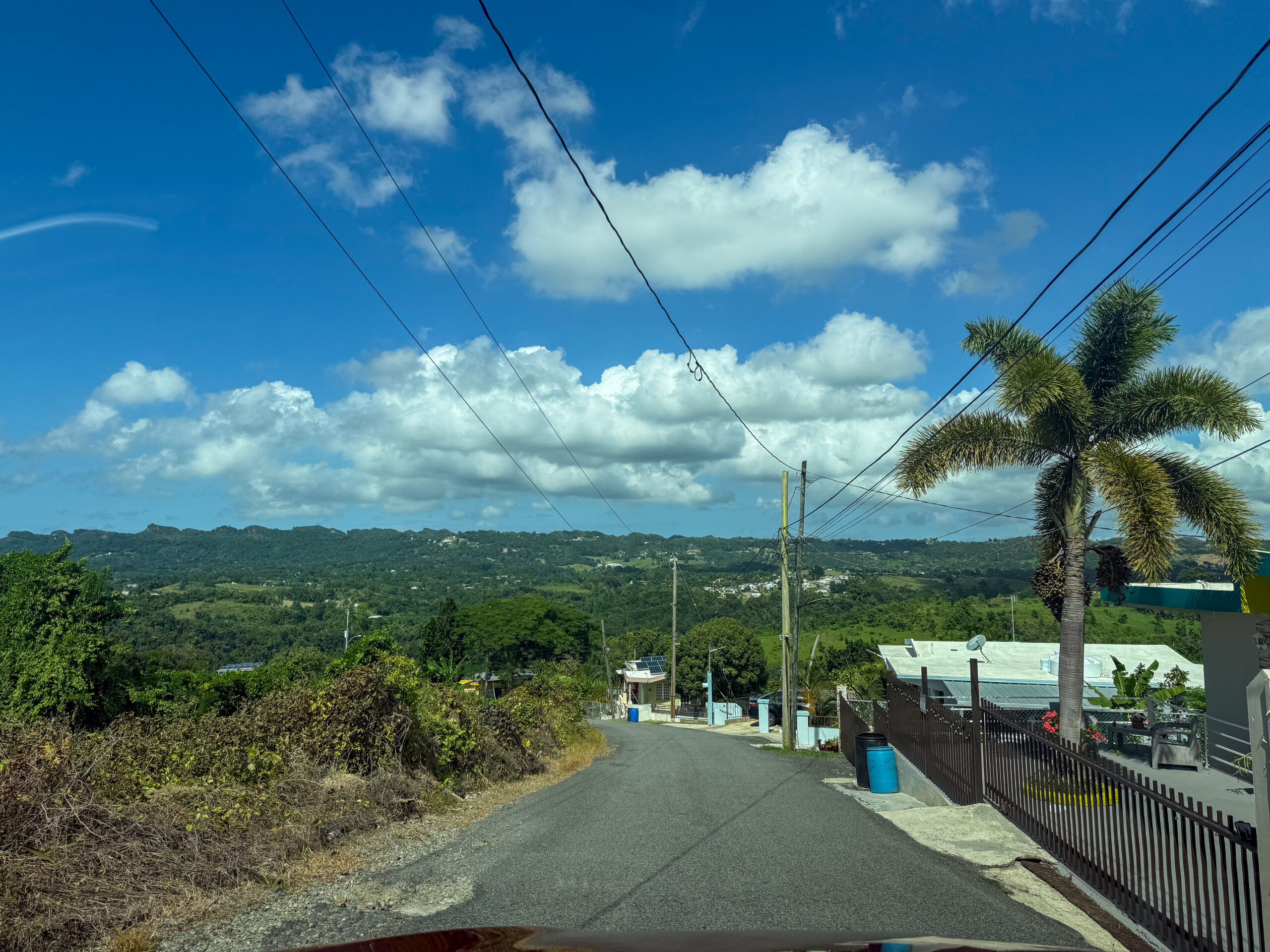
Local roads vary. If you’re going in the middle of the island, you’ll encounter a lot of windy roads that can make you car sick. They also get much narrower than the highways. For the most part, they’re pretty easy to drive on, but watch out for potholes, animals or people in the road. Speed bumps or “muertos” can be a little intense so be on the lookout for them as well.
Tolls in Puerto Rico (AutoExpreso Explained)
On the highways, you’ll encounter AutoExpreso or toll roads. They are very similar to an “EZPass” system, charged via a little device instead of a cash toll booth payment. You can avoid them by taking more local routes, but those can be much longer in distance. The tolls themselves are not that expensive so my advice would be just to pay them, especially if you have limited time on the island.
If you have a rental car, ask the company how they’re charging the tolls.
A lot of companies will propose the pay-per-day unlimited system, but I find that to be a waste. For most tourists, you won’t be driving multiple toll roads per day, so you won’t need that. Instead, ask if you can simply pay as you go and get charged at the end for all the tolls you have accrued. This is the option I have repeatedly chosen with Hertz, and it ended up being the most economical choice for me.
Navigating the roads should be fairly easy with all the modern tools we have on our phones. Simply use Waze for real-time driving updates with traffic, accidents, police checks etc. If you don’t like Waze, Google Maps is just as good in 2026 too.
No matter which tool you choose, I’d recommend downloading an offline map in case you lose service. And you can lose service in the mountains very easily. And don’t forget your car phone charge either!
Driving Rules in Puerto Rico
Most rules will be similar to those in the US. The main difference that people might not be used to is that red lights can be treated as stop signs between 12 am and 5 am.
Other than that, these are the main things to know:
- Speed limits exist – 55-65 mph on highways & 25-35 on more local roads
- This doesn’t mean people won’t speed past you on the road 🙂
- Don’t drive in the left lane – let people pass you
- You can turn right on red unless posted otherwise
- No drinking and driving – 0.08 is the limit as it is in the US
- Seatbelts are mandatory
- No phone usage
- Some signs are in Spanish:
- Pare = Stop
- Desvío = Detour
- Salida = Exit
- Velocidad = Speed
- Ceda el paso = Yield
Parking in Puerto Rico (San Juan + Beach Areas)
Parking can be stressful, especially on narrow streets in San Juan. There is limited street parking, lots of people walking around, and signage that might be confusing. My biggest tip for parking in San Juan is to get into a garage and walk to wherever is that you’re going. The city is not that big, and having peace of mind is more important than trying to squeeze into a tight spot. For example, there are a couple of garages on Recinto Sur which give you a central location for walking the city.
If I were only staying in San Juan and not venturing out much, I wouldn’t rent a car, as Ubers are abundant and cheap. I only rent one if I know I will be exploring a lot outside of the city itself.
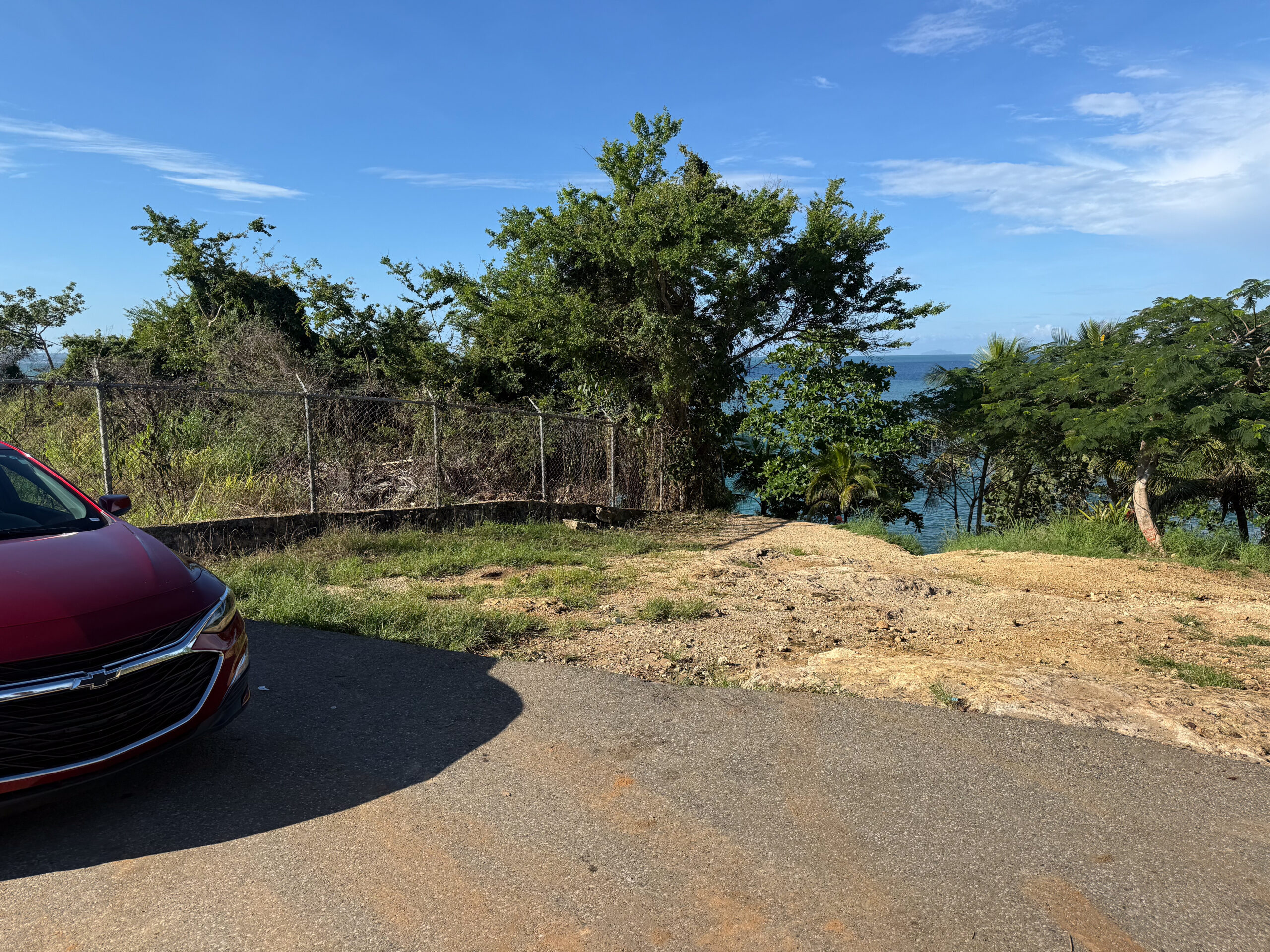
Parking near the beaches is mostly straightforward. You can either park in a designated spot, a paid lot or near the side of the road if allowed.
No matter where you park, make sure not to leave any valuables in the car or anything else that can call attention to petty theft.
Gas Stations in Puerto Rico: What to Expect
As someone who grew up in New Jersey and very rarely pumps their own gas, I always stress about gas stations in other places. Puerto Rico’s gas stations can function a little differently than what you’re used to, but it’s more than manageable.
Stations closer to the airport can have an attendant help you out, but it’s not the case for most. Since you can’t always pay at the pump, you’ll need to pay inside. First, you’ll choose your pump, look at the number on it, go inside, and tell the cashier how much you want on that specific pump. You’ll say “$20 on pump 7” for example, and you’re all done. You might have to leave your card in there if you’re filling up.
The prices are shown in liters, not gallons, so make sure you know that. As of 2026, gas prices are under ~$1 per liter at 3.8 liters in a gallon, which is around ~$3.5 to $3.8 per gallon.
Vocabulary to be aware of at the gas station:
- La gasolinera – gas station
- Pagar – pay
- Tarjeta – card
- La bomba – pump
- Llenar el tanque – fill up the tank
Remember to fill up your tank completely before you return your rental car to avoid crazy refueling fees.
In terms of gas station scams, which are common in the world, I didn’t hear or hear about anything unusual that happens in Puerto Rico. Simply follow general safety rules: if someone is filling your tank, check that they zeroed it out. If someone is too friendly and eager to help you at the pump, be cautious and don’t fill up your tank in the middle of the night alone.
What to do if you get pulled over
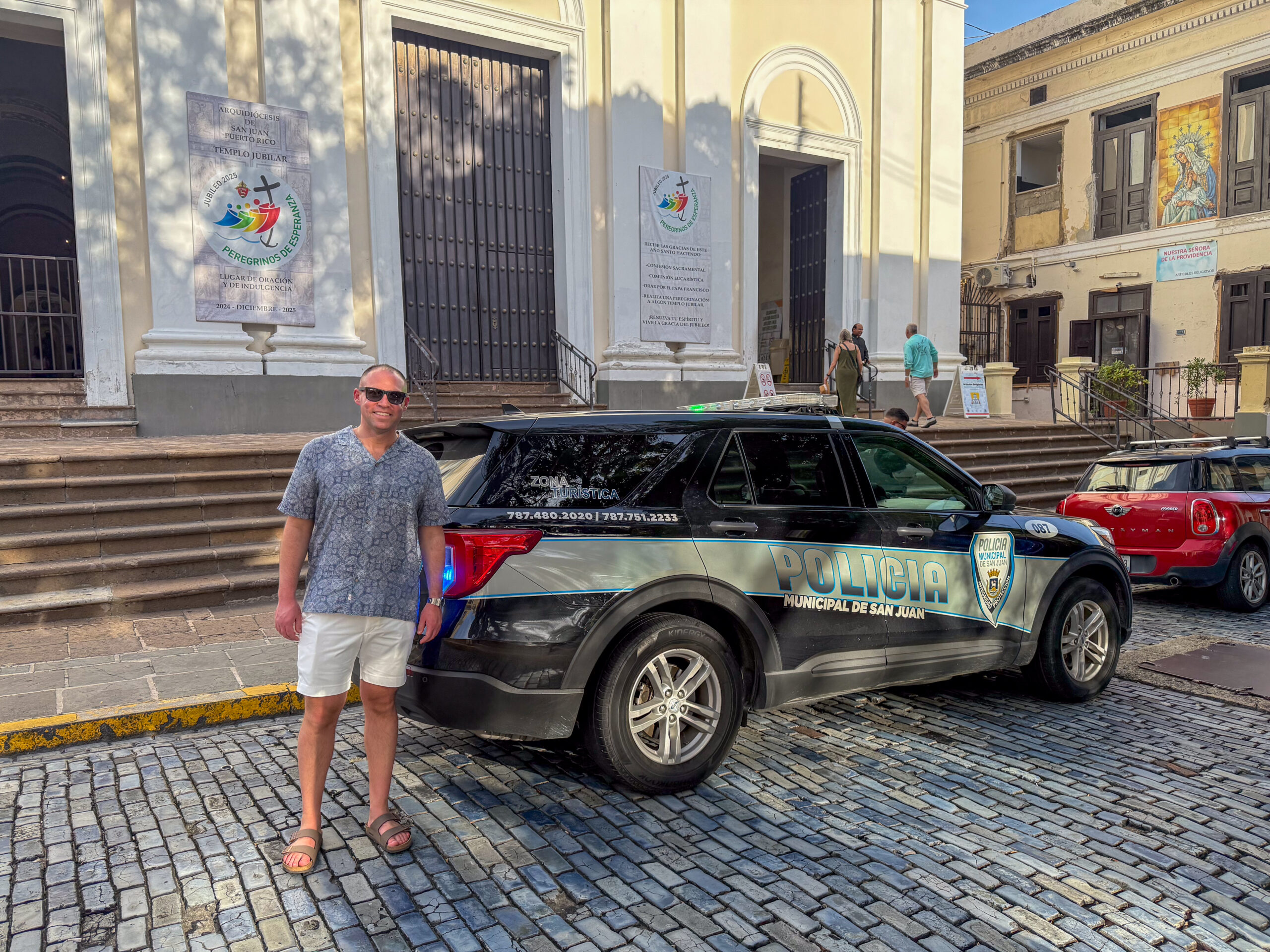
If you’re following the rules, there is no reason for you to get pulled over. In case you do, do as you would back at home: stay calm, be respectful, and follow instructions. If you’re renting a car, keep your rental paperwork accessible.
What to do in case of damage to your car rental
Shit does happen, so if it does, make sure you’re aware of what to do next.
I had two incidents with rental cars: one was a robbery where the car window was smashed and all my belongings were stolen from inside the car in Spain (a lesson to never ever leave your valuables in a visible view), and the second incident was car damage in Mexico.
Both times I followed the simple steps below and have gotten reimbursed by my credit card travel insurance.
- First, as easy as it sounds, stay calm. Things happen and you need to be clear-headed to figure everything out.
- Take photos – make sure to have all the videos and photos that you will later submit to your insurance company.
- Contact the rental company ASAP – they will likely arrange your towing or if you can drive the car, you’ll have to go pick up a new one.
- Contact the police – You will need to have a police report to submit to your insurance company.
- You will figure it out! – You’re certainly not the first person to cause damage to a rental car or get robbed. This is why having insurance is important.
Final Thoughts: My Best Advice for Driving in Puerto Rico
If you’re debating whether you should rent a car in Puerto Rico, don’t be nervous. If reading this article reassured you about everything you need to do and didn’t give you anxiety, then renting a car sounds like a good option for you.
If reading this gave more travel anxiety than you had before, maybe reconsider your choice. If you’re not planning to venture out too much out of your base, you will be fine with Uber and tour transportation, too.
Don’t be too confident, know what you’re getting yourself into, and most importantly, enjoy your vacation.
And once you get comfortable behind the wheel, Puerto Rico becomes the kind of place where a “quick drive” turns into the best part of your day.